My second week back from break is another one of those “too much news to cover” situations, so I’ll leave the chip giant’s affairs to other outlets. My narrow sliver of this world was overwhelmingly defined by the news of the Conference on Robot Learning (CoRL) descending on Austin, with more model-related news than New York fashion week.
You’ll find relevant announcements below from Google DeepMind, Walden Robotics, Boston Dynamics, and heck, even Apple. A whole bunch of companies got big funding rounds, key partnerships were announced or extended, and Amazon announced its next big swing at consumer robotics.
As the week progressed, the news section ballooned up like a medical professional moving an enteroscopy through a small intestine (a thing I learned about reading Liam’s feature).
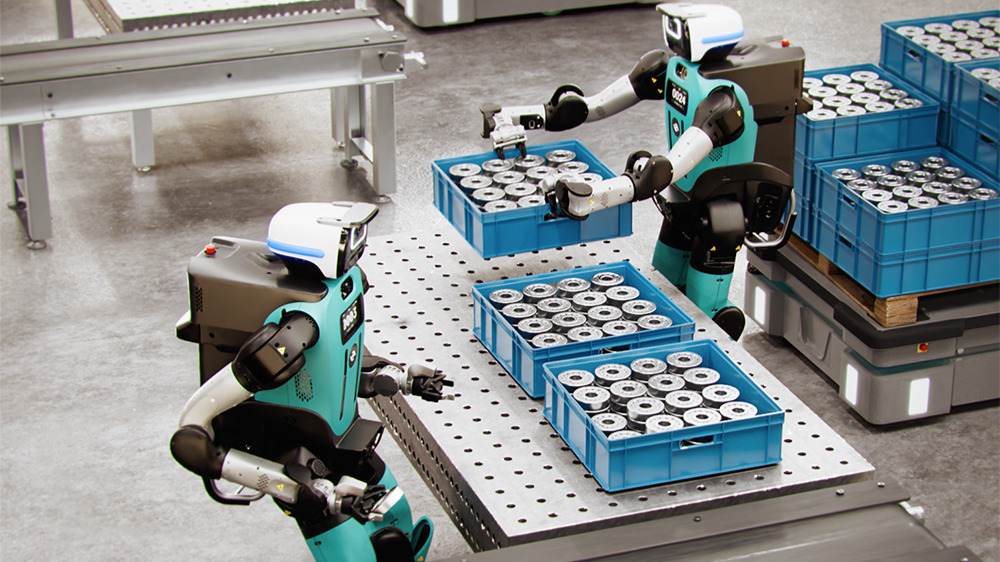
I did, however, finally have time to write up my most recent interview with Agility's Jonathan Hurst.
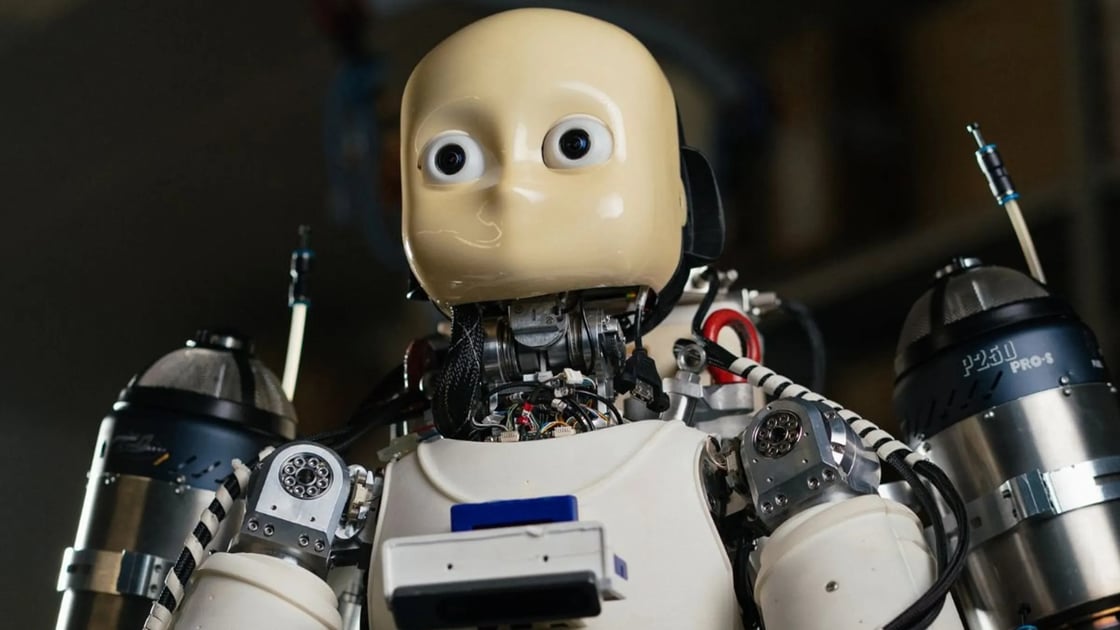
I’m also happy to finally share this week’s podcast episode with Generative Bionics’ Daniele Pucci. The first time I spoke with him for a story, I told Automated’s producer, Kristina, we needed to book him for the pod. Among other things, that’s his baby-faced flying humanoid research robot at the top of this post. It's a wild ride.
“I want Agility Robotics to be a thriving company a hundred years from now,” says Jonathan Hurst. “On the history books as one of the main drivers of this historical shift in how people think about labor and work and what machines do versus what people do. I feel like we're just laying down those bricks as we go.”
We’re at the start of something. This much we can say for certain. The past year has provided clear early indications of the “Cambrian explosion for robotics” Gill Pratt outlined more than a decade ago. The elements of this perfect storm are too numerous to name, from pandemic-driven automation, to the proliferation of capable data models, SLAM, simulation, chips, batteries.
Even economic competition between the U.S. and China has a key role to play, as the two superpowers commit to different financial and social models for fostering technological innovation.
It’s impossible to predict how this market shakes out a year from now, let alone 100. My perspective has always been that the landscape will look a lot different by the time industrial robotics get to meaningful scale. As Agility’s stock performance has demonstrated in its first week on Nasdaq, there are only so many factors the company itself can control.
From a macro perspective, the company landed on a difficult launch day for AI and AI-adjacent stocks, and that broader market volatility likely isn’t settling down any point soon. When it comes to those things it can change (to paraphrase the “Serenity Prayer”), the Pacific Northwestern humanoid startup has one very underrated tool in its belt: pragmatism. Continue reading >
A humanoid robot’s skin can be part of its intelligence. Daniele Pucci is building around that idea at Generative Bionics. Watch on YouTube.
Boris Sofman (Bedrock Robotics): We discuss one of robotics' more fascinating journeys: from desktop companion, Cozmo, to heavy construction machinery.
Rodney Brooks (Robust.AI): Live from Silicon Valley, the robotics pioneer makes his triumphant return to help us mark one year of Automated.
Dr. Jan Zizka (Brightpick): Discusses the tension between engineering quality and startup speed, and why robotics companies need to balance both.
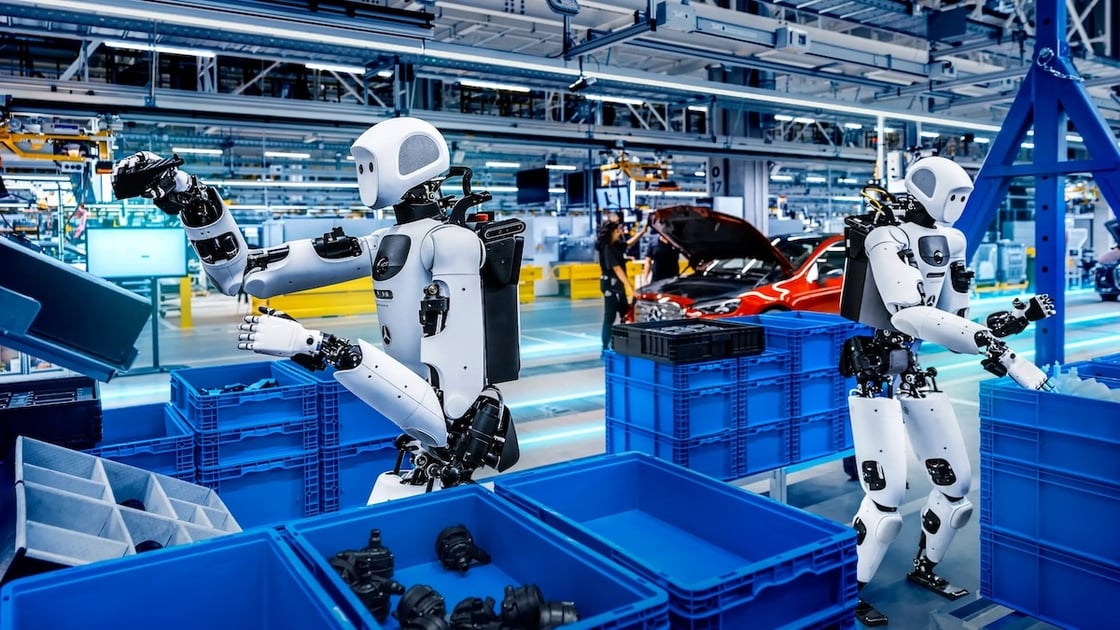
Google DeepMind just unveiled Gemini Robotics 2.5 in conjunction with the Conference on Robot Learning (CoRL) in Austin this week. The latest version of the vision-language-action (VLA) has been tested across 200 distinct tasks, per the division. Updates include more robust dexterity, safety improvements, and a reliability metric of “96% success rate,” with Apptronik’s Apollo 2 humanoid during proof-of-concept trials on Mercedes-Benz lines at German and Hungarian factories. The 200 aforementioned tasks cover a wide range of scenarios, including highly dexterous tasks like tying bows on gift boxes, transporting liquid into a pipette, and serving food with tongs. None of the aforementioned skills are indicative of any specific use cases, but are instead pieces of building out a robust model and demonstrating some particularly difficult tasks.
When I asked whether the ability to manipulate highly compliant materials like a bow were indicative of the system’s ability to assemble wire harness in an automotive setting (among the most notoriously difficult pieces of human labor in car plants), the team noted that applications in the Mercedes plant are currently focused on kitting. The 4% failure rate in those cases include “manipulation fumbles or a semantic failure,” per DeepMind. That primarily means mistakes like things being placed into the wrong bin. DeepMind further noted that the specific minimum success rate in an industrial setting varies dependent on the task. For instance, some mistakes are more easily corrected than others. Regardless, a 96% success rate is impressive, as humanoid companies look to generalize tasks beyond moving payloads from point A to point B. The edge cases will invariably be the most difficult to account for and therefore automate. As DeepMind tells me, "the road from 96% to 99.9999% is going to be steep."
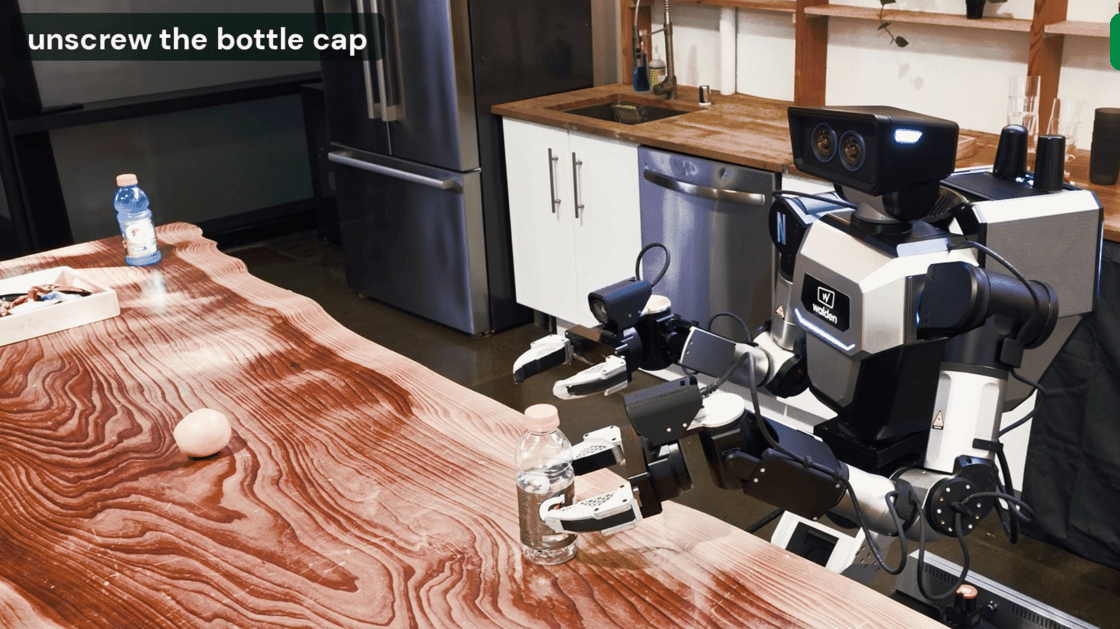
Russ Tedrake’s big CoRL news was the launch of Sage, version 2 of Walden Robotics’ large behavioral model. The LBM is said to be the product of eight-hour robot shifts in a North American Toyota factory engine manufacturing line (both Tedrake and his LBMs were at TRI prior to launching a physical AI startup). LBM 2.0 Sage has been trained on 100,000 hours of data gleaned from a range of sources, including ego-centric video, UMI handhelds, and human-in-the-loop feedback. Walden says the time between interventions has improved by more than 4x over the earlier model, while performing “demanding manipulation tasks that earlier models struggle to complete, combines physical skills more flexibly, and learns far faster in deployment.”
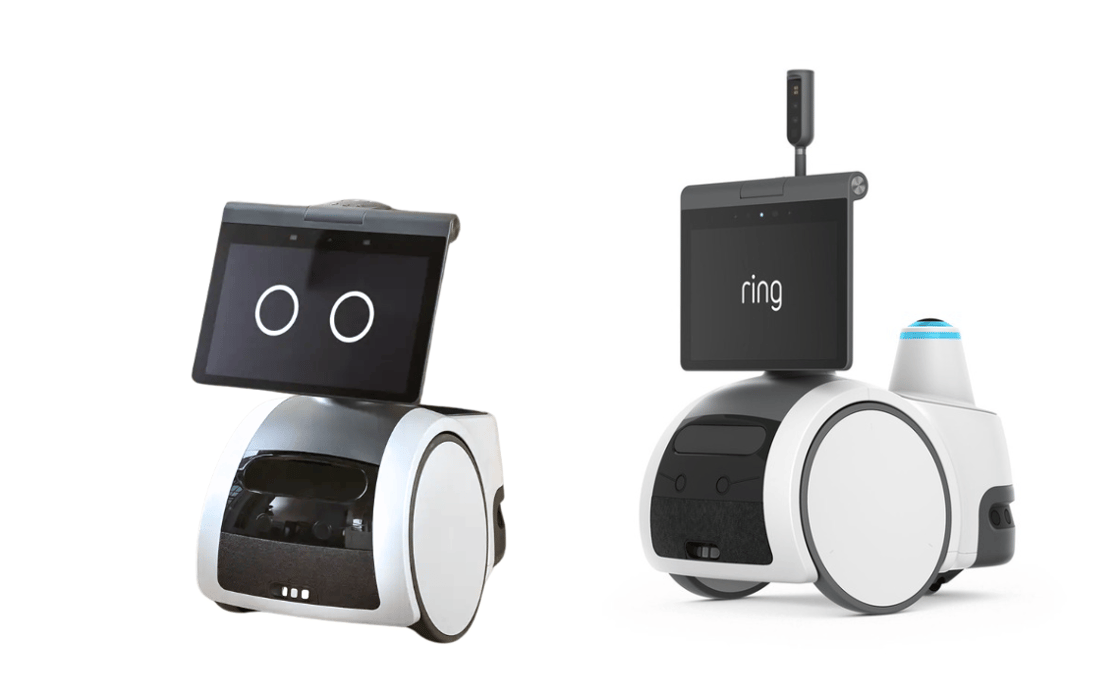
The fate of Amazon’s Astro has been in limbo for several years now. The retail giant hasn’t said much about its home robot since its limited pilot release. Next month, however, the system gets a new lease on life as one-half of the newly launched Ring Robotics line. The Ring Rover Cam maintains much of the wheeled robot’s hardware, including its clever periscoping security camera. Amazon has done away with the whole home companion bit, while doubling down on Astro’s one truly useful smart home feature, as a roving security camera. “It was originally inspired by feedback from Amazon Astro customers who said the feature they loved most was roving security,” the company writes in an announcement post. “As leaders in home and business security, the Ring team took that feedback, leveraged the best of Astro, and built something new—not a home robot that also does security, but a purpose-built security robot.”
Astro was released as part of Amazon’s Day One Edition, invite-only program at a price of $999 – though that quickly ballooned, before the robot was bricked and the product discontinued in under a year. The company always framed the robot as a kind of early adopter pilot device, with no guarantee it would ever be made widely available. The closest we’ll come is December 16, when Rover Cam arrives just ahead of the Christmas holiday at Astro’s original $999 price tag. In addition to the periscope camera, the robot features scheduled home patrols, incident robots (wherein the robot will go investigate), a built-in siren, and 4K video streams.
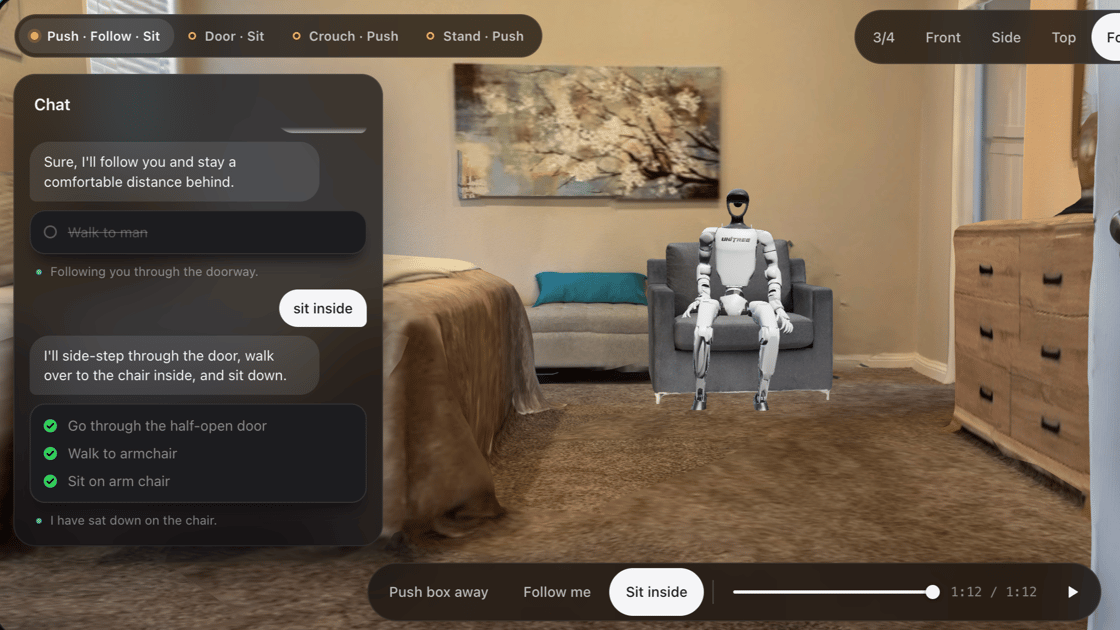
We're seeing a deluge of robotics research papers, as Conference on Robot Learning (CoRL) happens this week in Austin. Apple, which increasingly has pumped funding into the physical AI space since the disillusion of its electric vehicle program, recently surfaced HALO — not to be confused with the NVIDIA humanoid safety initiative of similar name — Humanoid Autonomy, Learned in simulation, running Onboard. The researchers describe the system as a "humanoid autonomy system powered by a pipeline that synthesizes vision-language-motion data across a thousand procedurally generated homes." The system is trained in simulation, with 300 hours created across synthetically generated homes.
The work finds a Unitree G1 system responding to natural language commands via a VLM. The robot is instructed to do a variety of tasks, including navigating around objects, crawling through doors, sitting on chairs, and pushing boxes. The work cites three principal contributions. The first is the aforementioned egocentric data generation. The second is an on-device autonomy stack mounted to the robot. The third is "whole-body autonomy demonstrated in previously unseen physical environments." The researchers say the system achieved a 91% success rate over 360 previously unseen real world home environments using the synthetic training.
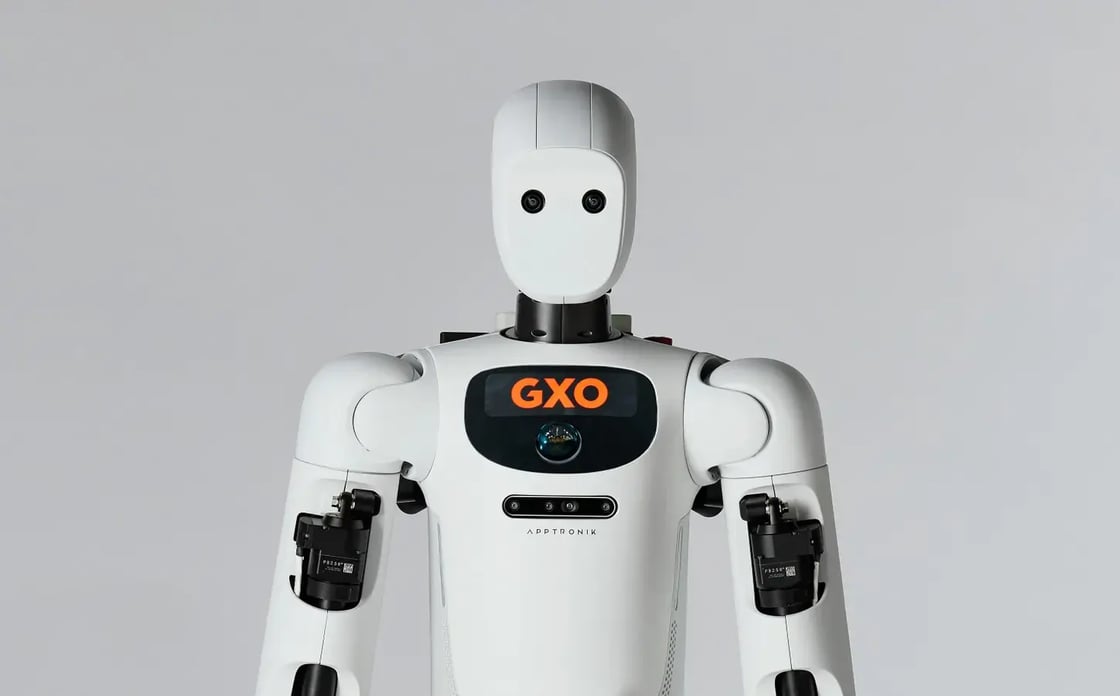
Here's the key nugget from this week's Apptronik/GXO RaaS partnership extension: "Subject to the success of the deployments and the ability to meet agreed performance, safety and operational KPIs [key performance indicators], the companies intend to progress toward global rollout of up to 1,000 Apollo humanoid robots over the next four years, with initial deployment in North America in late 2027." Apptronik has been among the more measured industrial humanoid firms in number of ways, including the fact that Apollo 2 is a research robot not intended for wide deployment.
Apptronik's partnership with the logistics giant dates back to 2024. Per GXO: "Under the agreement, GXO and Apptronik will expand joint trials of Apollo in live operations across a range of warehouse workflows, including goods-to-person and person-to-goods picking, case and tote movement, packing and sortation. Beginning in 2027, the trials will validate the safety, security and technical requirements for scaled deployment – with each use case assessed and sequenced against jointly agreed productivity, safety and operational KPIs – and demonstrate how humanoids can work alongside existing automation and GXO team members."
Path Robotics just raised a $300 million Series E. The deal, which values the automated welding firm at $2.45 Billion, was preceded by high profile ship-welding deals, as the U.S. Department of War pushes to rapidly extend its fleet. Path notes in a release: "The investment follows a period of rapid commercial expansion for Path Robotics, with annual recurring revenue (ARR) growing 17-fold over the past 18 months as the company scales deployments across major industrial customers in North America. "Toronto-based investment firm, Georgian, led the round, which also features participation from existing investors, Addition, Drive Capital, IronArc Ventures, Tiger Global, and Yamaha Motor Ventures.
“We started with welding because it is one of the hardest jobs on the factory floor to automate, and we’ve proven that our technology can succeed in real production environments,” CEO Andy Lonsberry says in a release. “We’re seeing accelerating demand from manufacturers that need to expand production capacity but can’t get there with traditional automation. This capital allows us to scale our welding business alongside our customers while investing further in the data, compute, and model development needed to take on every task before and after welding. Our goal isn't to automate one step, but to automate the entire factory.” Some of the new capital will be invested in expansion "beyond welding into new manufacturing tasks and robotic form factors, along with increased investment in AI model training."
SoftBank Group Corp. is leading Agile Robots SE's $500M Series F. NVIDIA, Hitachi Group, and T.Capital also participated in the round, which values the Munich-based humanoid firm at $8.5B. With a total of $2 billion raised, Agile is planning a push into the U.S. (home to a humanoid manufacturer with a ... similar name), along with future unnamed markets, all while increasing existing capacity in its native Germany. Earlier this year, the company opened a plant outside of Munich with the "capacity to produce up to 10,000 legged and wheeled humanoid robots annually."
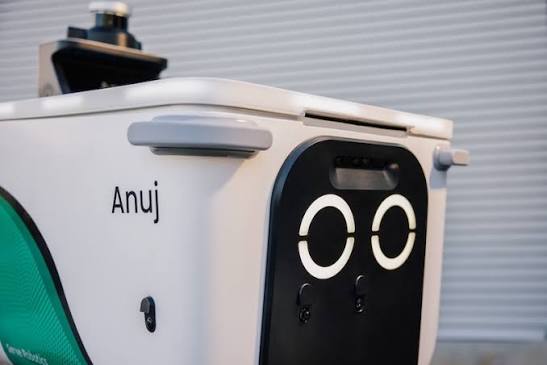
Delivery startup Serve Robotics just launched its AV Delivery Developer Portal, along with a public API, granting developers the ability to build Business apps for its network. The offering includes a sandbox environment for testing prior to deployment. Wednesday's news follows the recent launch of the Serve Physical AI Services portfolio featuring Serve Link, Serve Data Curator, and a new foundation-model data catalog. Recent moves have found the Bay Area firm leveraging the vast troves of data collected from 2,000+ robots spread across 40 cities (and 27 hospitals, factoring in the Diligent acquisition). In fact, Serve has joined the wider industry trend of referring to itself as "a leading physical AI company," signaling a shift in focus away from hardware, as it capitalizes on the rapidly growing field of data collection and model building.
Serve cofounder and CEO, Ali Kashani, is positioning AV Delivery Developer Portal as a method of introducing more developers into the physical AI fold in a way that doesn't require building hardware from the ground up. “You shouldn’t have to start a robotics company to build something useful with robots,” he notes in a release. “We’ve spent years figuring out how robots can navigate neighborhoods. The people who live and work there will have needs we haven’t thought of. Opening our fleet gives us an opportunity to serve those needs.” The offering is currently live over here. Developers will need the green light from Serve to move beyond the sandbox onto a live robot.
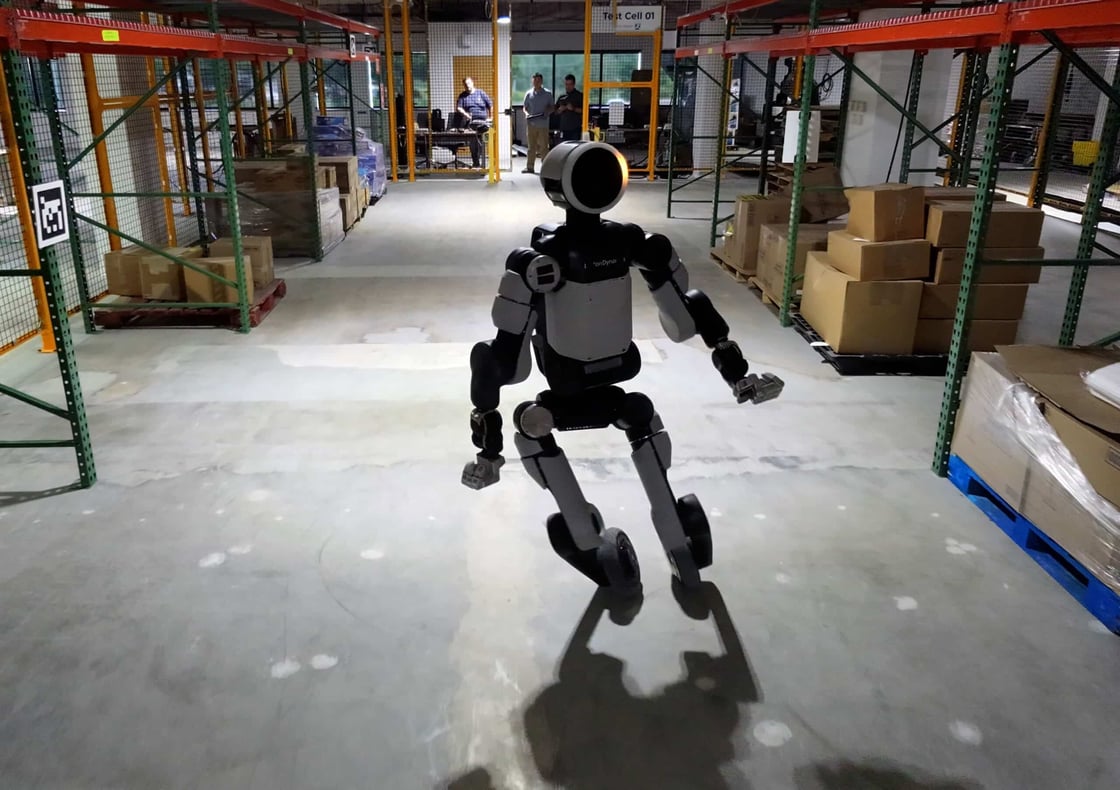
Boston Dynamics put wheels on Atlas. With an off-the-shelf scooter adapter, the company says the process was "about as involved as swapping a wheel on a bicycle." Control engineer Xiaoyu (Andy) Wu writes in a blog post, "The software side was just as straightforward. Each wheel is simply modeled as an 'ankle' that can spin continuously, so all I had to do was take the baseline robot model and swap the feet out for wheels. I’m still amazed at just how easy the whole process was." The company is quick to add, "A wheeled Atlas isn’t a product. It’s a research testbed." Instead, the project was intended to "push the limits" of the hardware, stress tests a whole-body controller, and maybe get a viral video in the process.
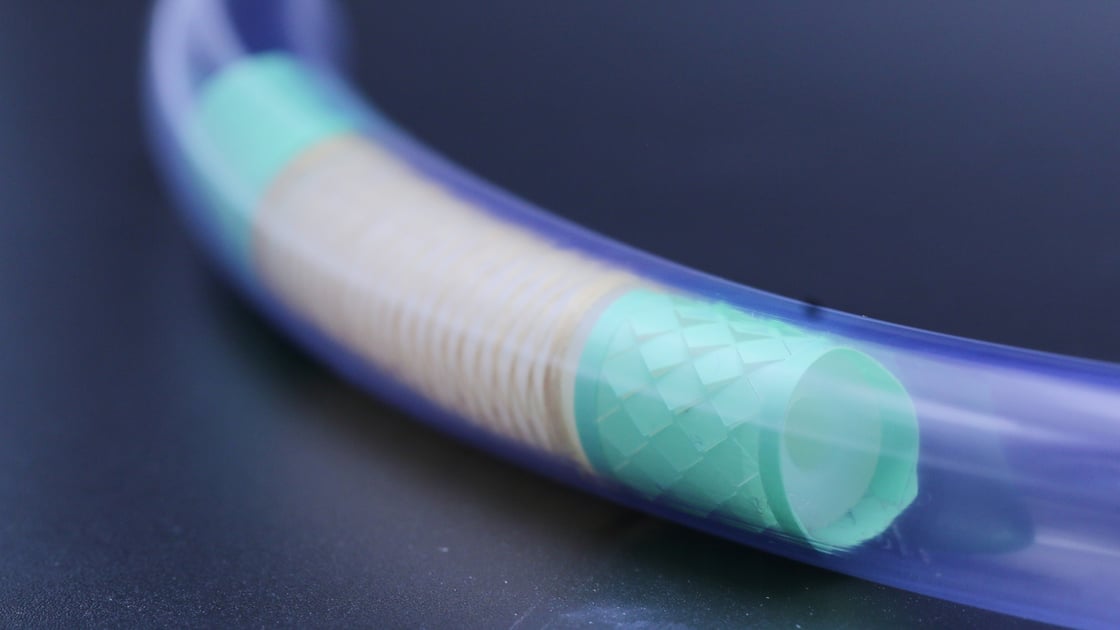
Turns out there aren’t a lot of great ways to access the small intestine. As Liam notes in his latest, accessing the organ requires highly invasive procedures. Diagnoses present their own issues. Currently the best way to get a look inside there involves inflating and deflating balloons to give a camera a peek at what’s inside. MIT researchers naturally did what MIT researchers do and built a snake-inspired soft robot (complete with the scales seen in the above image) that can wiggle its way through the passage.
Hasbrolaunched Sixth Wall Studio in June to capitalize on “Behavioral Licensing.” That’s the toy giant’s term for “authorized AI characters that partners can deploy quickly, safely, and on‑brand” – IE, using behavioral models to design an AI version of IP that can essentially act and react the way that a character might in real-time, real-life scenarios. One thing lacking in all of this, however, is embodiment. That’s where a new deal with Dynamic Creatures comes in. After all, the startup is going after theme parks, resorts, and other spaces in the hospitality/entertainment space with free-roaming, semi-autonomous systems built atop Boston Dynamicsrobots. Tuesday sees the parties announcing a joint venture that “combines Sixth Wall’s character authoring and alignment with Dynamic Creatures’ mobile, expressive robots to develop characters that can greet guests, share an adventure, and remember them when they return” to venues where those systems have been deployed.
That last bit is the most salient piece of this. In the world of intellectual property, brand loyalty is king. The notion here is developing a sort of continuing two-way conversation between children (primarily, one imagines) and their favorite characters that extends beyond visits to the aforementioned property and keeps them begging parents and guardians to return year after year. It’s effectively a large language/large behavioral method for cementing and extending the sorts of early child memories many associate with such characters and locales. “Together, the companies envision encounters that become part of a continuing story at entertainment and hospitality venues,” the companies note in a joint release. "A character at a resort could welcome a guest, send them on a quest and, during a later encounter, ask how the adventure went.” Per Dynamics Creatures CEO Marc Theerman: “For generations, people have formed powerful connections with fictional characters. Now those characters can share our physical world and respond to us as individuals. Sixth Wall brings the character intelligence and creative framework. We bring the physical expression and presence.”
The Consumer Technology Association just released the Innovation Awards list for January's CES 2027. It's shaping up to be another big year for physical AI, with 21 honorees in the robotics category. As expected, there's a strong focus on humanoids at the big tech event once known as the Consumer Electronics Show. Robotics honorees include:
OSenze Technology Limited's LightSkin, a "high-resolution optical tactile sensing solution that gives robots a human-like sense of touch."
Agibot's Omnihand 3 Ultra
Ecovac's LilMilo robot companion dog
Beijing Zhengqi Future Intelligent Technology's Quorra X5 personal mobility platform
Pictured at the top of the post is the Irmo Bot's M1 "vision-based" exoskeleton. The system ddresses issue of situational awareness for exoskeletons I addressed in a piece over the summer. That piece addressed how vision systems can help exoskeletons anticipate and compensate for heavy payload lifts in industrial settings. In the case of the M1, the work is largely assistive for hiking. "Powered by an AI Environment Perception System, IRMO M1 can anticipate user movement intentions and detect complex terrain changes in advance," per the company.
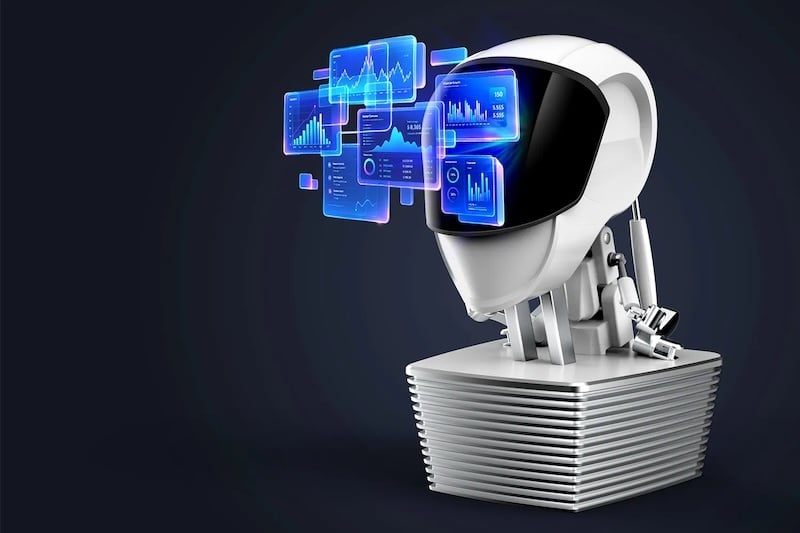
Here's the eight-inch humanoid display LG is set to unveil at CES 2027 in January. The Korean consumer consumer electronics giant calls Light Field Display (LFD) "the world's first 3D display solution specifically designed for humanoid face." The component is one of next year's CES 2027 honorees. "Moving beyond the limitations of physically fixed robot face designs, its 3D optical technology creates lifelike visuals that enable more natural expression and emotional interaction between human and humanoid," writes LG. "Without requiring any physical modification to the robot, this display can present a wide range of 3D facial expressions, virtual avatars, and other user interfaces."
No word on whether the company has found any robotics manufacturers to implement the technology, or if it plans to integrate it into a proprietary humanoid system. Earlier this year, LG announced plans to expand its robotics portfolio, both through a partnership with NVIDIA and the launch of a Robotics Business Center in Seoul over the summer. "LG will pursue a comprehensive, three-pillar strategy to target robotics opportunities in industrial, commercial and residential spaces," LG noted in June. "The Robotics Business Center will complement LG’s expanding robotics portfolio including the home robots, alongside the industrial robotics capabilities of Robostar and the commercial robotics expertise of Bear Robotics. This approach will create a comprehensive business portfolio that addresses future demand across the sectors." LG also manufacturers a range of industrial robotics actuators, including the AXIUM.
The Association for Advancing Automation (A3) is North America’s largest automation trade association representing more than 1,500 organizations involved in robotics, artificial intelligence, machine vision & imaging, motion control & motors, and related automation technologies.