I have seen my future, and once again, it includes a lot of airport Uber lines. I’ve got a pair of quick trips coming up, and you can catch me live and in person if you don’t blink (not blinking, incidentally, is Silicon Valley’s new “996”).
First, I’ll be returning to the Steel City for the first time in a bit. I’m going to be hosting a fireside chat as part of the Pittsburgh Robotics Network’s annual Robotics & AI Discovery Day. The day after that, you can catch me doing laundry at my home in the Hudson Valley. And then it’s time to get hyphy because we’re back in the Yay Area.
But the night before that, Automated is hosting its first-ever West Coast happy hour and live podcast taping, all in one. You can RSVP right here, or scroll down slightly to find out more information, including the name of that episode’s guest.
Speaking of Rodney Brooks, he’s our lead feature this week, discussing Robust.AI’s new CEO and what deploying 100 robots in the real world does to your circadian rhythm. The second feature involves another Bay Area startup with one of the more remarkable journeys in recent memory. We talk to CEO Inhi Cho Suh about Niantic Spatial’s journey from Pokémon Go to ExxonMobil platform.
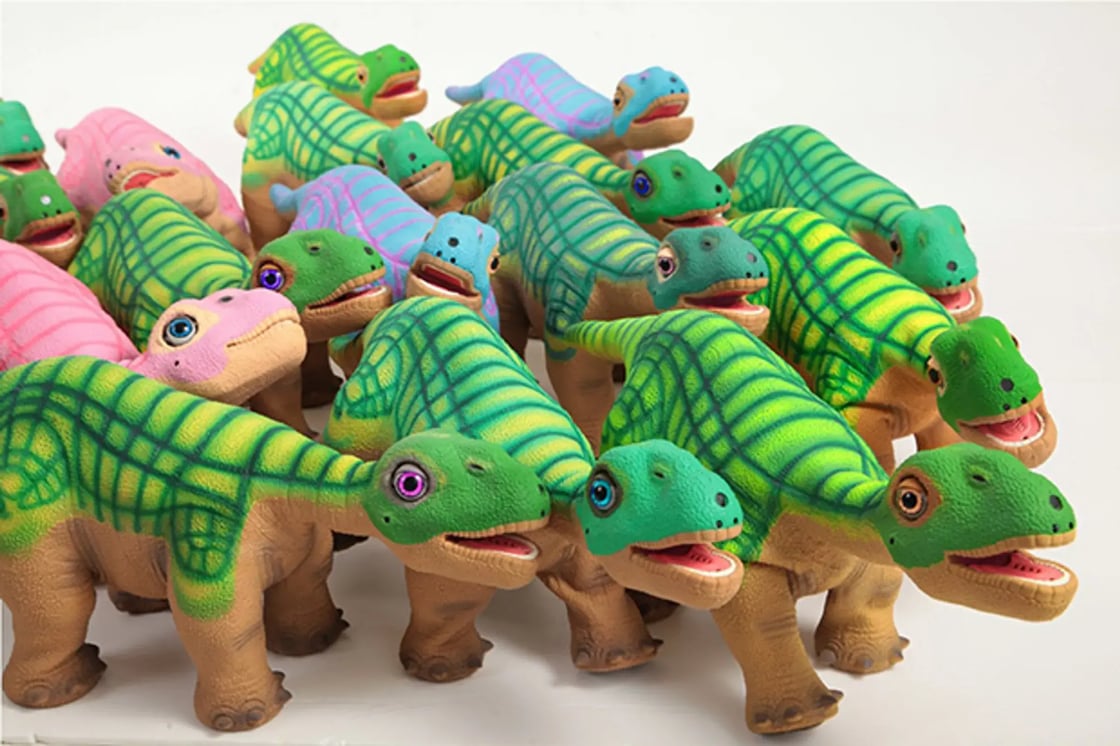
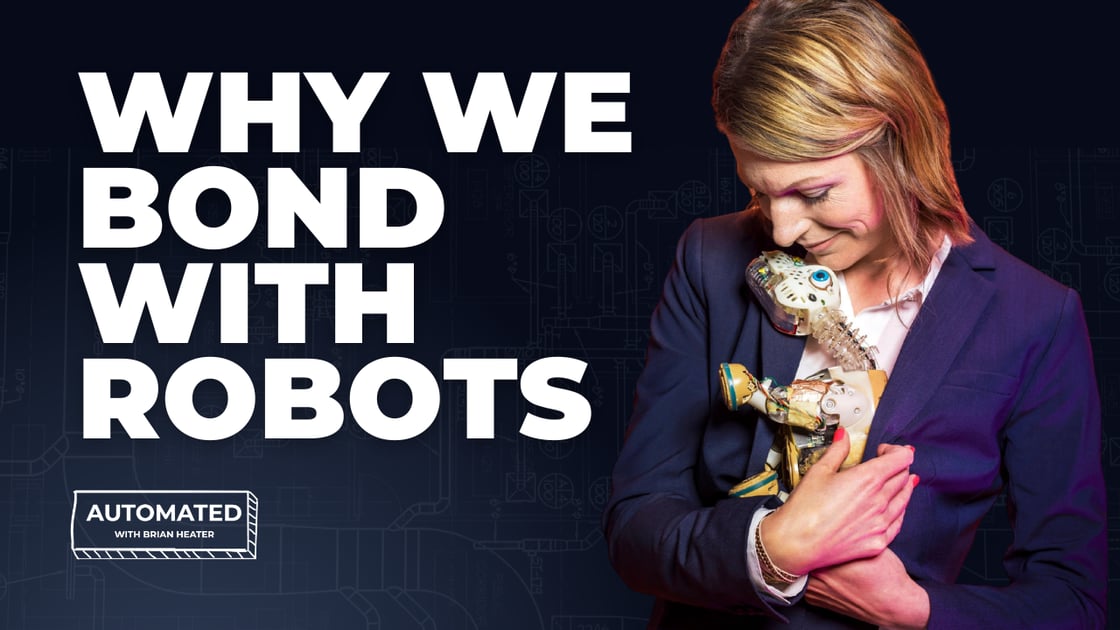
We’ve got a really fun pod for you this week, as RAI Institute’s Research Lead for Robotics, Ethics & Society, Kate Darling, talks about empathy, labor, and the story from her latest book about that poor, long-suffering Pleo. Speaking of podcasts, A3 just launched another (also more below).
I actually went a bit light on the third-party news this week, because we’ve got so much great original content from our small but mighty team of A3/Automated contributors. Matthew Smith has a long feature about robot framework development, Becca Szuztak talks to the CEO of Robot.com, and Liam Critchley interviews researchers about a robotics system being deployed for stroke recovery.
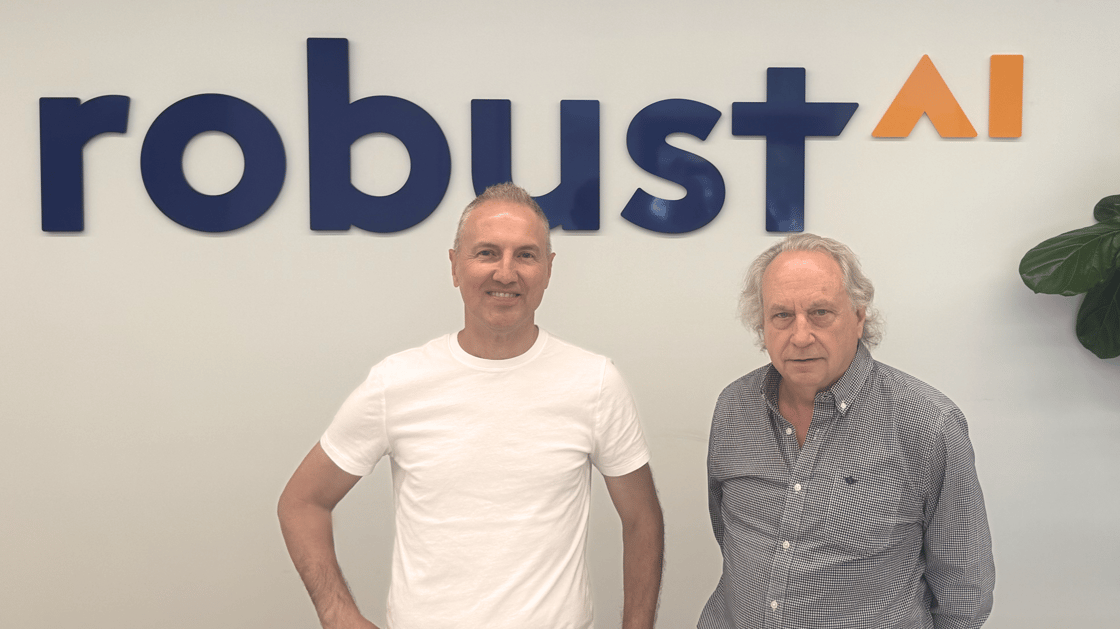
Robust.AI dropped two important – and closely connected – pieces of news last week. The headline grabber was the change in leadership, as longtime CEO Anthony Jules stepped into the chief innovation officer role, with former Fox Robotics CEO Marin Tchakarov taking the chief executive spot.
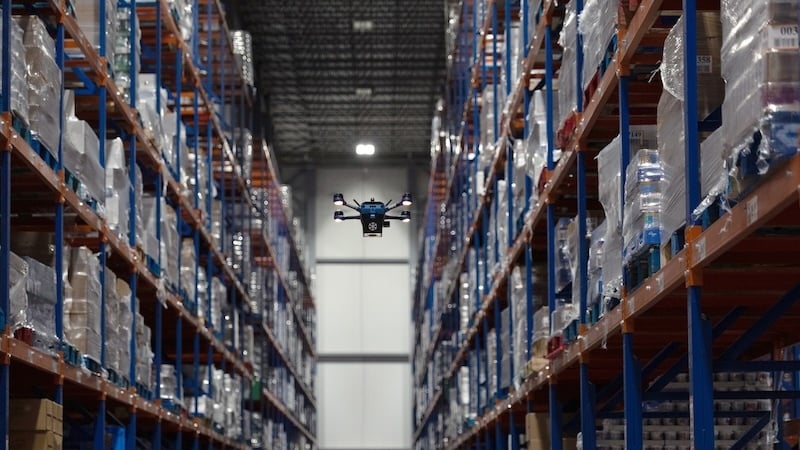
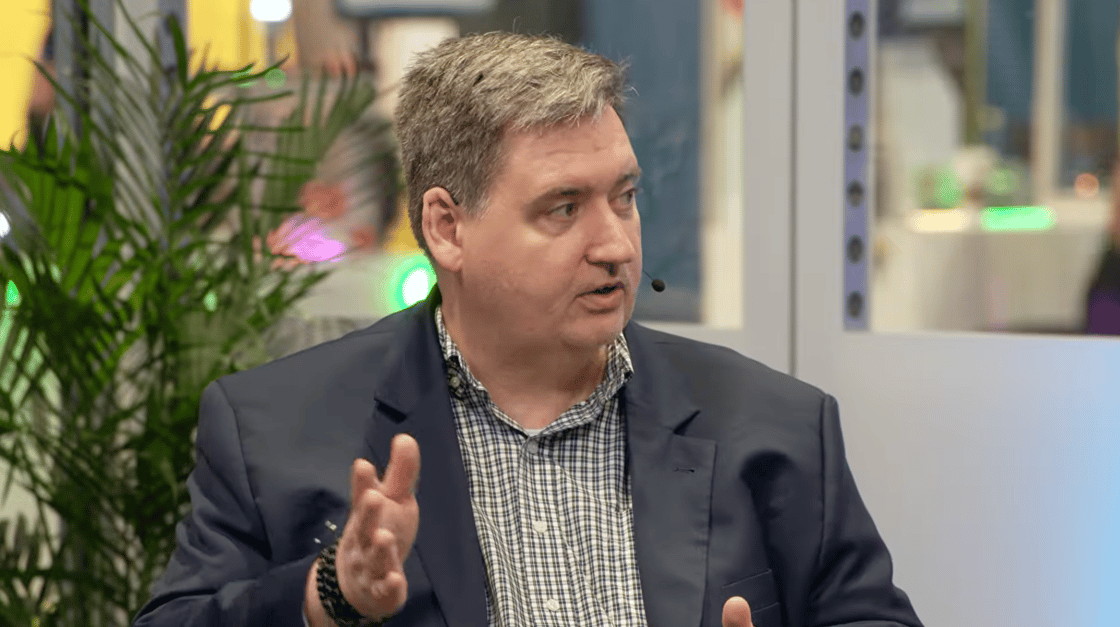
That move was facilitated, in part, by news that the Bay Area company had deployed its 100th Carter unit. In a call last week, CTO Rodney Brooks confirmed that the total number of units shipped is higher, with plans to deploy those systems over the course of the next 30 days.
The milestone “says it’s real,” according to Brooks. “I've been telling people, unless you get calls at 3 a.m. on a Sunday morning sometimes saying, ‘what the hell is going on?’ You haven't really deployed. That's the indicator to me that you're really out there, you're really making a difference. It's not just a show.”
It’s a typically pragmatic response from Brooks, who has scaled robotics hardware companies twice already.
“When you get 100 actually deployed, people are relying on you,” Brooks continues. “You have to have a team. You have to have the whole thing going 24 hours a day, seven days a week, just to be ready. That's when it starts to get real, because there's that many robots out there. Something might go wrong. We've only got one of those calls, but it says people are using it around the clock and it matters to them."
A decade into his tenure as cofounder and CTO, iRobot managed the impossible, mainstreaming a home robot in a manner no company has recaptured in the decades since.
From 2008 to 2018, Brooks held the same titles at Rethink, making inroads in the industrial setting with cobots Baxter and Sawyer. By most accounts, the company was ahead of its time, introducing concepts that are only just beginning to reach a more mainstream acceptance. The robots, meanwhile, remain fixtures at academic institutions and research facilities.
It’s the latter experience, in particular, that’s given Brooks fairly unique insight among the current crop of robotics startups. It’s the difference between “produced,” “shipped,” and “deployed.” One-hundred robots deployed is a bird in the hand, compared to the claims of thousands produced with limited, closed-door deployments. That’s not to say there isn’t a place for all these things, but it’s important to assign each the appropriate context.
Hallucination,” says Inhi Cho Suh, “is a luxury that embodied AI can't afford.” Niantic Spatial’s CEO contrasts the real-world margin for error against those we’ve grown accustomed to dealing with from LLMs and the like.
By way of explaining why simulation has become such an important aspect of robotics training, the company notes in a recent blog post, “Running [reinforcement learning] in the real world is hard, because robots do not get many second chances. A misjudged gap or a collision with a glass door is expensive, slow to reset, and can damage hardware.”
(There’s also the matter of humans, animals, and vehicles to contend with — but let’s not get ahead of ourselves.)
Niantic Spatial’s core proposition isn’t world models, so much as models of the world — large geospatial models (LGM). It’s a kind of digital twin for reality, built on the supposition that the best way to accurately train robots in simulation is to hew as close to the real world as is plausible.
The startup’s origins lie in that fuzzy line space between the real and digital. Niantic (full stop) was birthed from Google’s labs in 2010, spinning off half a decade later when the corporate entity renamed itself Alphabet. Soon after it achieved near smartphone ubiquity with the launch of AR sensation Pokémon Go. Several IP-driven titles, financial struggles, and its eventual acquisition ensued.
In the meantime, Niantic built out a significant amount of core technology. The company got very good at understanding depth, while amassing a trove of geolocated images. The newly absorbed gaming arm dropped the name, while Niantic Spatial spun off as its own company, propelled by a database of "over 30 billion posed images from millions of locations around the world” and $250 million in funding.
In March, founder John Hanke stepped down after 16 years leading the company, naming Cho Suh as his replacement. With five months under her belt, the CEO is still a relative newcomer, though her tenure amounts to more than one-third of Niantic Spatial’s existence.
The intervening months have seen the startup team form a broad coalition of partners, including Adobe, NVIDIA, Flexion, and ExxonMobil. (“It’s an oil refinery,” Cho Suh says of the latter. "No Pokémon Gothere.") Arguably the most interesting of the bunch, however, arrived earlier this month, when it partnered with an entire Northern Californian city.
Is every social robot still in its PalmPilot stage? The breakthrough may come when people stop asking what a robot does and begin recognizing companionship itself as the application. Watch on YouTube>
Nic Radford (Persona AI)- A lot of companies claim to be building humanoids for the real world, but few walk the bipedal walk quite like Persona AI's ultra-rugged welding systems.
Kathryn Zealand (Skip) / Jessica Bath (UCSF) - Kathryn Zealand joins us to discuss her Google wearable robotics spinoff, Skip. After that, UCSF assistant professor Jessica Bath discusses how exoskeletons are being used by Parkinson's patients.
Ali Agha (Field AI)- Live at Automate 2026, FieldAI's CEO discusses his NASA background and the state of physical AI.
Call it a homecoming of sorts. Just in time to be a week late for our one-year anniversary, Automated is returning to the Bay Area, where it all (or at least where I all) began. We’re hosting a combination happy hour/live podcast recording on Tuesday, September 22, just ahead of A3’s AVAC event. Our friends at Silicon Valley Robotics are helping us put on the anniversary bash in Mountain View. Come earlyish to attend a rare-ish, live-ish episode of the podcast with robotics pioneer (and this week's featured newsletter guest), Rodney Brooks of Robust.AI. Brooks was a day-one guest, so it feels especially appropriate to have him there to blow out the candle. Stay long enough to hear me tell boring stories about how weird it is that my nearby hometown has been swallowed up into Silicon Valley. The happiest of hours will be had by all.
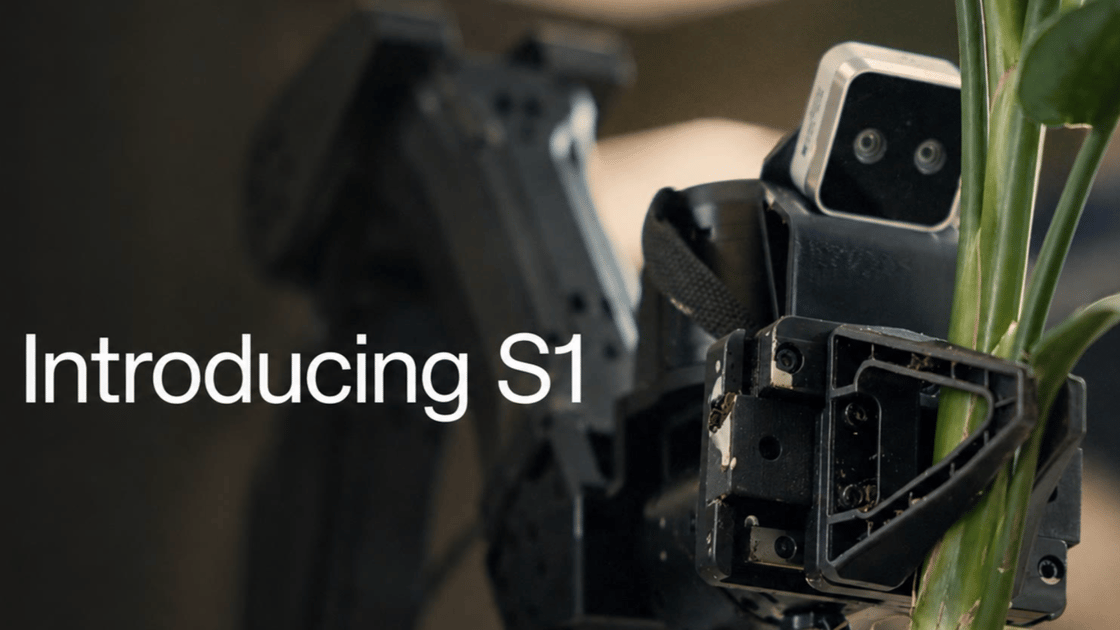
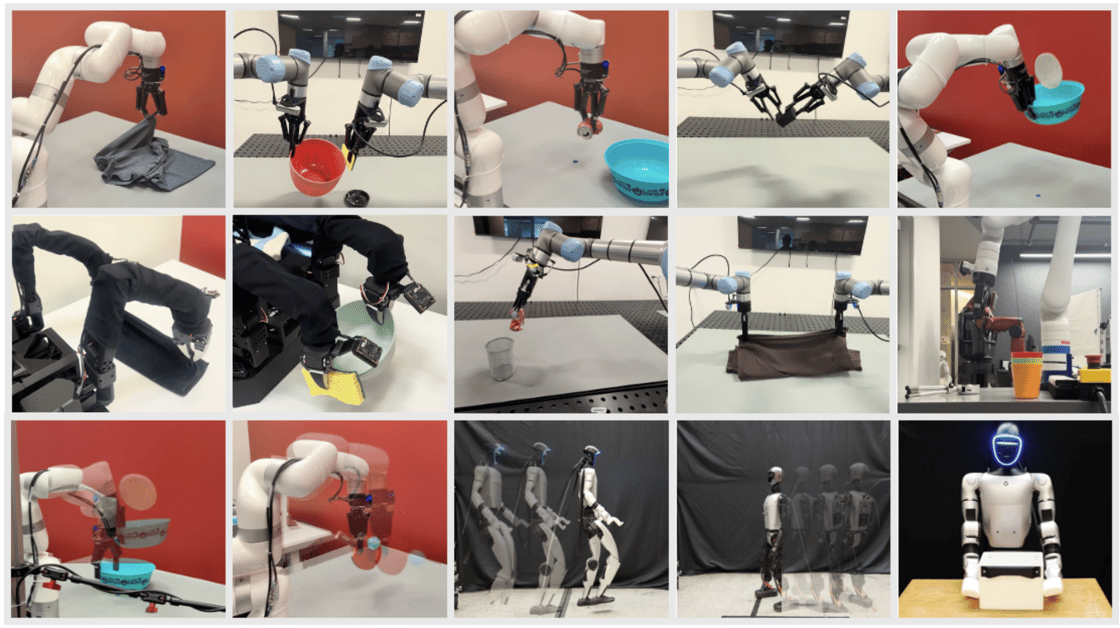
New model just dropped. This one's from Skild, and it arrives with some big claims —- and breakfast foodstuffs. The Pittsburgh-based physical AI startup says the system can learn a 10-minute task from a single human demo, with no fine-tuning required.
"The first time S1 flipped a pancake, we assumed pancake flipping must have been in its pre-training data," the company writes. "We searched millions of hours of pre-training data — and found nothing. S1 inferred the out-of-distribution task from one demonstration." The below technical blog breaks down the value of in-context learning and the role it will play in model fine-tuning and pre-training.
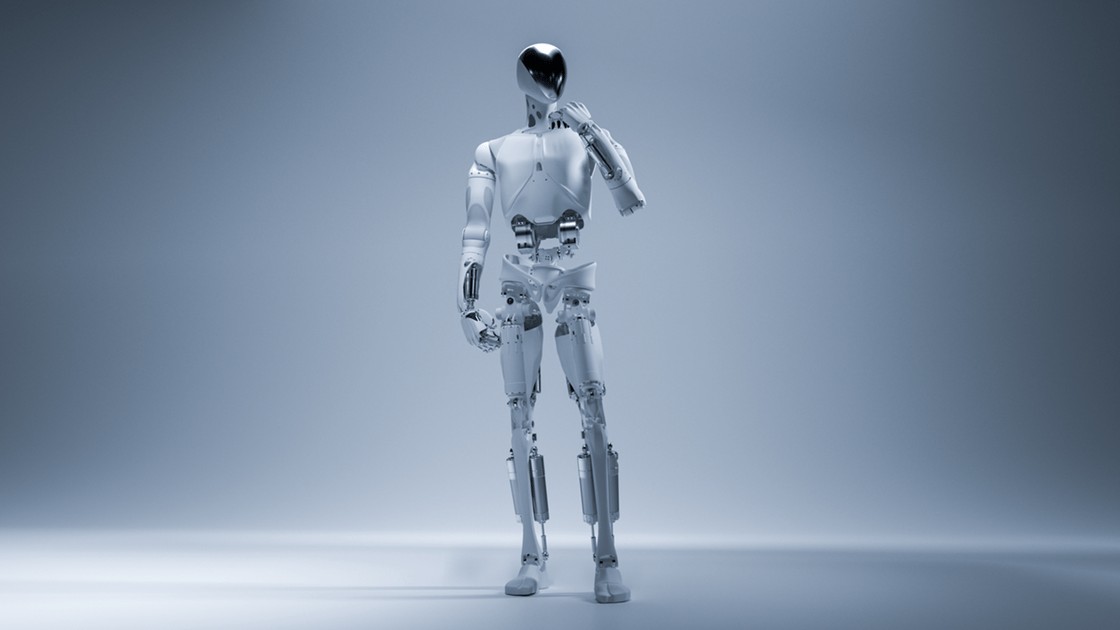
In a normal cycle, I would say that “The largest single-round private financing ever recorded in China's embodied AI industry” was an awful lot of qualifiers for a funding round. This, friends, is not a normal cycle. It’s the kind that starts with a B and rhymes with “trouble.” Even with all of those adjectives lined up, we’re still talking about a remarkable feat — and a price tag to match — at $900 million. That puts Xpeng Robotics post-money valuation at $6.3 billion (again with the Bs). What’s more remarkable still is that it’s all in on a company that’s not known for making robots. That, however, is the sort of investor interest you get when you ship a ton of electric vehicles, as the Guangzhou manufacturer managed to do in 2025. Xpeng’s done what any company experiencing massive global growth would do: it went and built a humanoid. Like another highly publicized EV manufacturer, the firm’s long view involves robotics overtaking automotive. Its Iron humanoid will lead the way, with previously stated plans to produce 1,000 a month by year’s end.
How about a quote from lead investor, IDG Capital? "Xpeng has established a comprehensive, integrated full-stack capability across edge AI processors, Physical AI foundation models, and complete robotic systems, underpinned by industry-leading on-device compute, training compute, and a robust high-quality data flywheel. The robotics business also benefits from significant strategic synergies with Xpeng's smart EV and autonomous driving businesses. We believe these advantages will make Xpeng a leader in driving the humanoid robotics industry toward real-world deployment at scale."
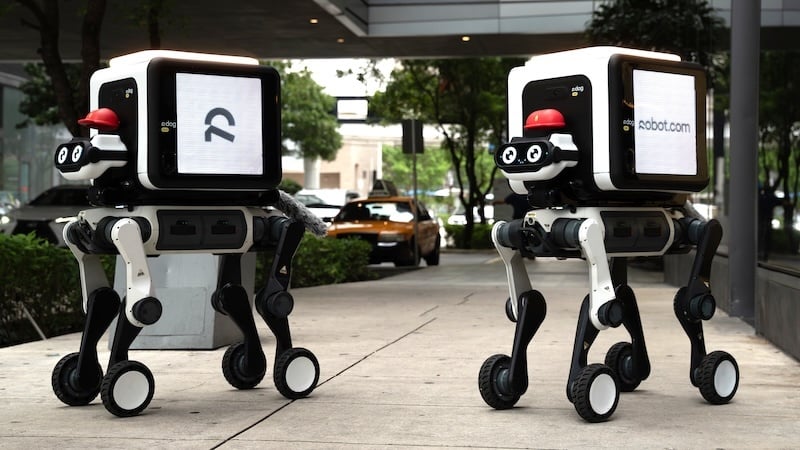
This week, Becca profiles Robot.com's ever-growing army. I'm sure there will one day be a point I write about the startup without mentioning that it began life as U.C. Berkeley accelerated campus food delivery service, Kiwibot — but today is clearly not it. The newest addition to the family with the most valuable URL in robotics is R-dog. I'd be remiss if I didn't mention the similar form factor to RIVR, the ETH Zurich delivery startup Amazon snapped up not all that long ago. Legs? Wheels? Why choose? All that matters is whether the burrito is still warm when it arrives.
We've got a long feature this week from Matthew Smith, who sits down with folks from NVIDIA, Hugging Face, and RIO to discuss the important work being done in robotic frameworks — and the fragmented nature of the current landscape. "It’s similar to what happened with natural language processing back then," Hugging Face's Steven Palma says, drawing a parallel to the early days of large language models. "Everyone was kind of building their own pipelines.”
Looks like we have competition company. We’re on the eve of debuting the second podcast in A3’s growing audio-visual empire. The Association’s newly minted director of market intelligence, Aaron Prather, launches the inaugural episode of the Business of Automation on Friday. The show does what it says on the tin, breaking down news and industry trends on the weekly. Sub via LinkedIn below.
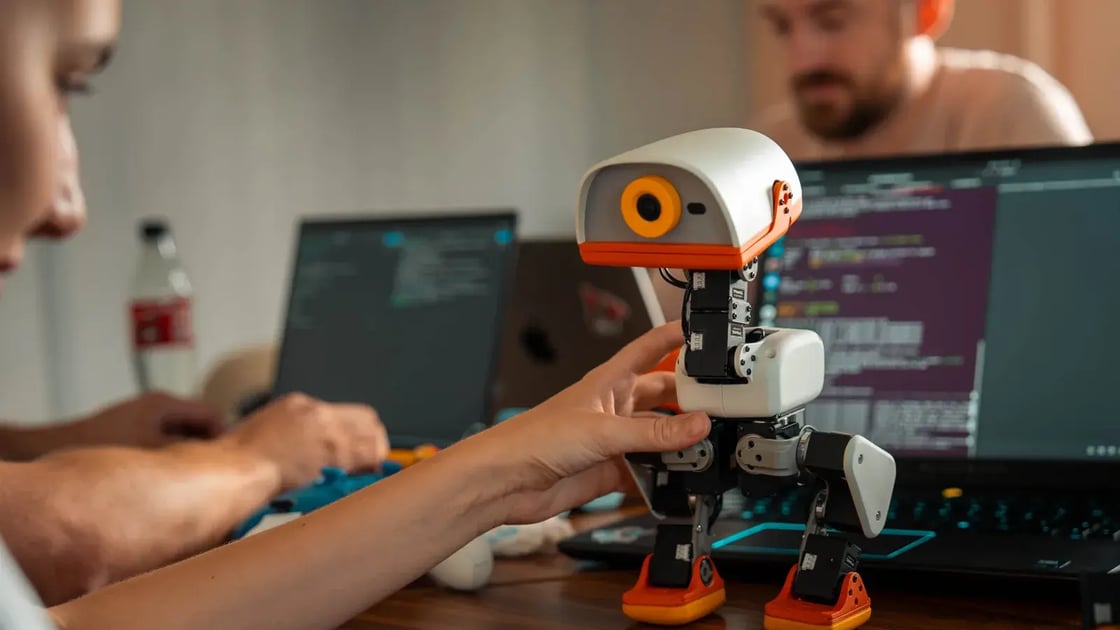
All signs are pointing to a massive Hugging Face sale — likely at the hands of partner and money machine, NVIDIA. At the time of publication, at least, here's what the French AI firm is willing to talk about on record: Microduck. The desktop companion robot is the latest from Reachy Mini-maker, Pollen, the open-source robotics firm Hugging Face snapped up in April 2025. I'm getting some Anki Cozmo vibes from the $399 robot. "Microduck starts from the other side of physical AI: action," writes Pollen. "How do you teach a robot to move? How do you train a behavior in simulation, transfer it to real hardware, see what went wrong, and try again? What changes when the robot can leave the desk, carry something, fall over, and recover? It is an ideal platform for developers who want to train physical behaviors, experiment with reinforcement learning, and test how AI moves from simulation into the real world."
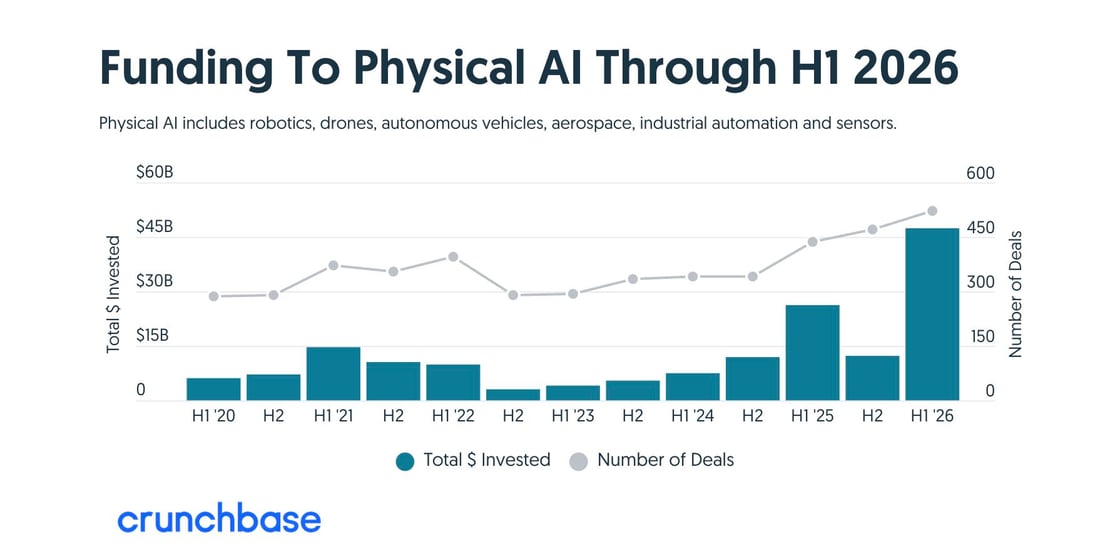
My former TechCrunch colleague, Mary Ann Azevedo, maps out the bubble that definitely isn't a bubble, as physical AI funding continues to explode like a humanoid through a wall in a TikTok video. The number of deals has increased substantially, but wowie zowie, just look at those funding totals. Crunchbase tracked 521 deals totalling $47.4 billion for H1 of 2026. That's up from $26.4 billion across 436 deals over the same time period last year.
Before Claude watermarked what remains of the grey brainslop sloshing around our skulls, one would rely on what Amazon playfully deemed "artificial artificial intelligence" — that is to say, paying a bunch of people on the internet to do small tasks for you. Named for the great-granddaddy of fake humanoid demos, the Mechanical Turk's plug gets pulled for good on September 30.
The Association for Advancing Automation (A3) is North America’s largest automation trade association representing more than 1,400 organizations involved in robotics, artificial intelligence, machine vision & imaging, motion control & motors, and related automation technologies.


-4.png?width=1120&upscale=true&name=Untitled%20design%20(6)-4.png)