Things have settled down ever so slightly after last week’s deluge of news stories. Even so, we’ve got a good mix of stuff for you this week. Generalist CTO Andrew Barry and I discuss why modular end effectors could be a good indicator of a model’s understanding of the world around it.
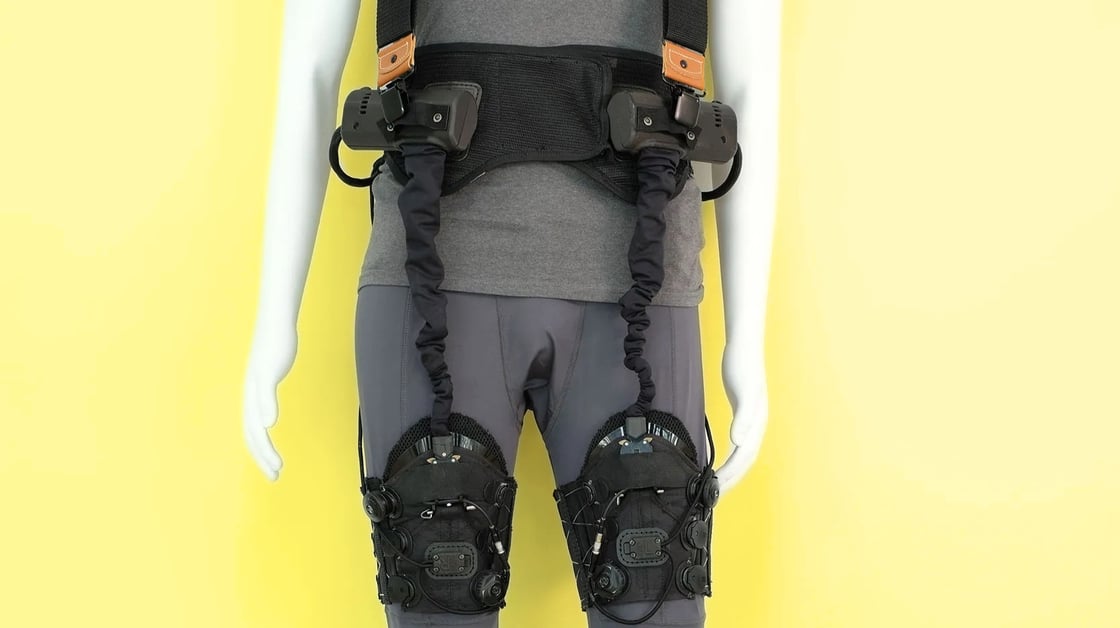
I also do a deep dive into how some recent wearable robotics breakthroughs could impact people living with Parkinsons. I spoke to Skip CEO Kathryn Zealand, UCSF’s Jessica Bath, and Viking Exos director Matthew Dickinson, among others.
I’d like to tell you that the fact we’ve got two features on robotic construction companies this week is anything but sheer coincidence, but I keep my editorial calendar on the back of a cocktail napkin. Anyway, Liam’s piece on All3 and Becca’s interview with Monumental’s founder offer good insight into the state of that industry.
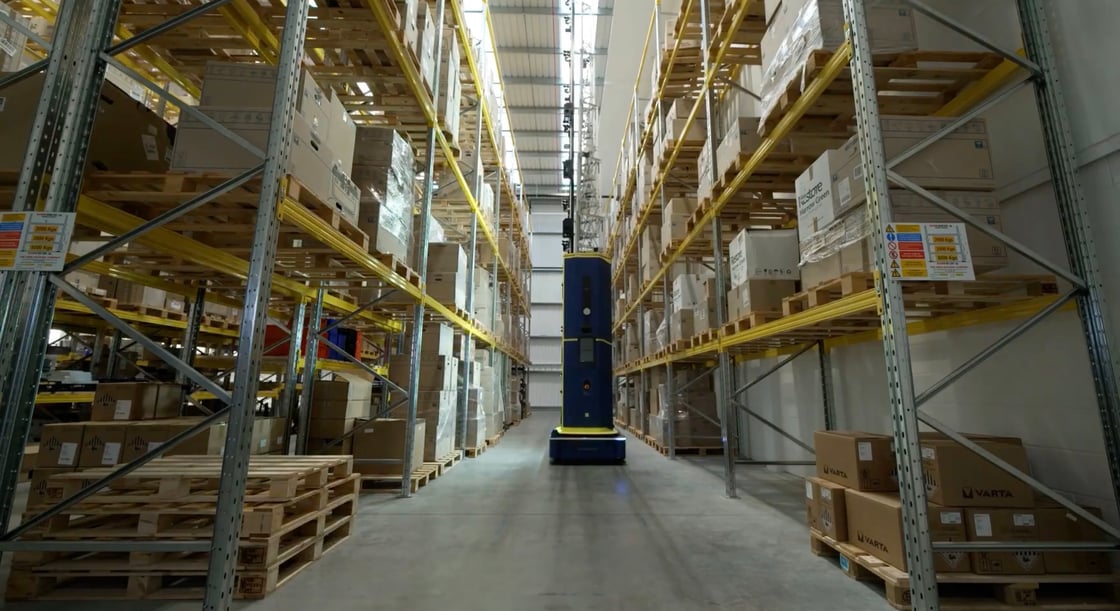
We’re also finally releasing the episode we recorded at Dexory’s Nashville offices a while back. That’s a fun one for a company doing innovative work in fulfillment — and you can also check some of the largest autonomous mobile robots you’ll ever see. Oh, and for good measure, the folks at A3 asked to write something on the new GigE Vision 3.0 standard. You’ll find that here.
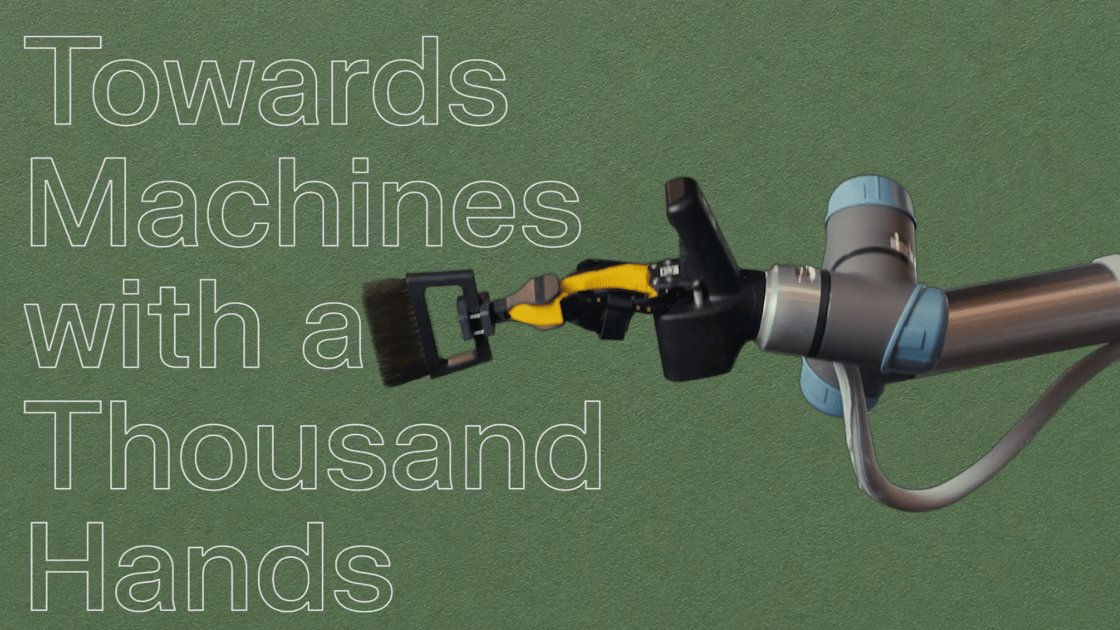
Generalist, like much of the physical AI world, is excited about hands. These days, it seems, the startup is particularly interested in what hands tell us, humans, about how our models interact — and what they understand about — the world around them.
“A model trained across embodiments can gather shared knowledge across instances and more readily separate what is specific to a tool from what is universal about the world,” Generalist writes in a recent blog post titled “Toward Machines with a Thousand Hands.”
The thesis here is that data captured from a broader range of form factors offers a more robust picture of the world it inhabits, which can, in turn, train a broader range of form factors. The post continues, “Switching between end effectors to reach a goal then becomes a form of physical reasoning.”
The post specifically touts the ability of the company’s in-house robotics dataset, Gen-1, to freely swap between end effectors. While the different hands represent a diverse set of “sensorimotor interfaces,” the robot arm can freely swap between them on the fly. It will recognize the differences in the way the tool interfaces with the world and adjust its approach accordingly.
“It's a really convincing argument, for me at least, that the model has this representation,” CTO Andrew Barry told me on a call last week. “Basically, I don't think we can all come up with another explanation for why it's so easy to adapt to other hands, other than the model has learned knowledge of friction, objects, what it means to pick something up in a more general way.”
Roboticists don’t always love comparing their work to LLMs, but Generalist finds one particular analogy to be useful. Specifically, it’s the way that learning rules in one language can help improve the model’s performance in another. The team cites a 2019 paper that states that “pretraining multilingual language models at scale leads to significant performance gains for a wide range of cross-lingual transfer tasks.”
Monday would have been my father’s 74th birthday. I’m not quite sure how it will go — it’s still fresh. I would say the same for the first Father’s Day without him, as that passed a mere two days after he did. I suspect he might have had a laugh at that last bit, however, were circumstances different. He had a good sense of dark humor until the end, even if he didn’t always have the best timing.
He was also sharp until his final day. It’s a curious thing about Parkinson’s Disease I never fully grasped until experiencing the decline in a parent. At one point someone described the process to me as a kind of inverted dementia in the way it attacks the body more than the mind.
It’s not a medical framing, probably misses the mark in some fundamental ways, but after watching a grandparent decline from Alzheimer’s, I found it a helpful way to reconcile the process. Sitting down, talking to him about baseball, he didn’t miss a beat. Then he’d stand up to use the bathroom, and you’d recognize just how quickly the disease accelerated in his final days.
I naturally took a keen interest in the condition once his doctors finally settled on a diagnosis. I’ve written a fair bit about the need to deploy technology for good. Early in my career, it was a focus on sustainability, and as I moved into more consumer tech, health wearables played an increasingly important role. That story became a sharper focus after a friend’s doctor essentially prescribed an Apple Watch in the wake of a heart scare.
Transitioning into robotics has deepened that connection. With the right energy and focus, this technology offers tremendous opportunity to effect positive change. Exoskeletons, in particular, highlight the human connection. They were central to two of the most profound moments of my career in tech journalism. In one instance, a man paralyzed from the waist down walked across the stage during an event I was hosting. The other involved a video shoot, wherein a wife was in tears as her husband — an officer injured in the line of duty — walked again.
Over the years, I’ve covered work on the exoskeleton as an assistive/accessibility device. This is one of two key categories startups have focused on when looking to commercialize. The other being the augmentation of human labor — allowing people to do physical tasks with less wear and tear on their own corporeal form. Both are valid and worthy goals with plenty of upside.
We visit Dexory’s new Nashville facility for a conversation with CEO and co-founder Andrei Danescu about his path from Formula 1 engineering to building one of the most distinctive systems in warehouse automation. Watch on YouTube>
Ali Agha- Live at Automate 2026, FieldAI's CEO discusses his NASA background and the state of physical AI.
Samantha Johnson (Tatum Robotics)- Johnson's ambitions to connect the deafblind grew as the community was cutoff from contact during the pandemic.
Ayanna Howard - The incoming president of Spelman College has based her illustrious career around creating robotics for good, from pioneering climate work at NASA to a STEM startup.
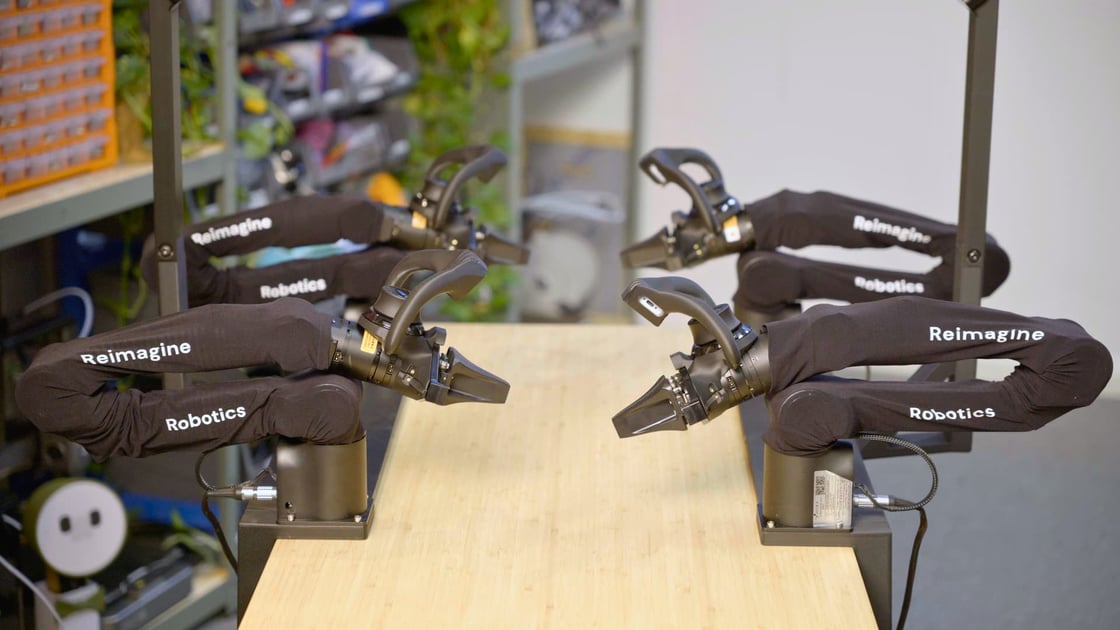
Former members of Google DeepMind’s London Applied Robotics team de-stealthed their startup this week. Founded in April 2025, Reimagine (not to be confused with Rethink — though also not entirely dissimilar in principle) aims to simplify robot learning. If all goes as planned, human beings will essentially be able to train their robot coworkers on the fly. Reimagine is testing its hypothesis in a number of real world businesses at the moment, including a plastic firm that’s using robots to mind its 3D printers and another gig centering around hard drive disassembly.
“During the project, Reimagine Robotics reduced the time required to prototype and test a new robot behavior from approximately one day to around ten minutes,” the company writes. “That allowed the robots to become part of the process-design conversation: teams could propose a new use for a robot and test the idea almost immediately.” The announcement arrives following a pre-seed raise of undisclosed size. Reimagine’s staff is currently based in London and Sydney. The funding will go toward teaching humans to train robots to learn from people.
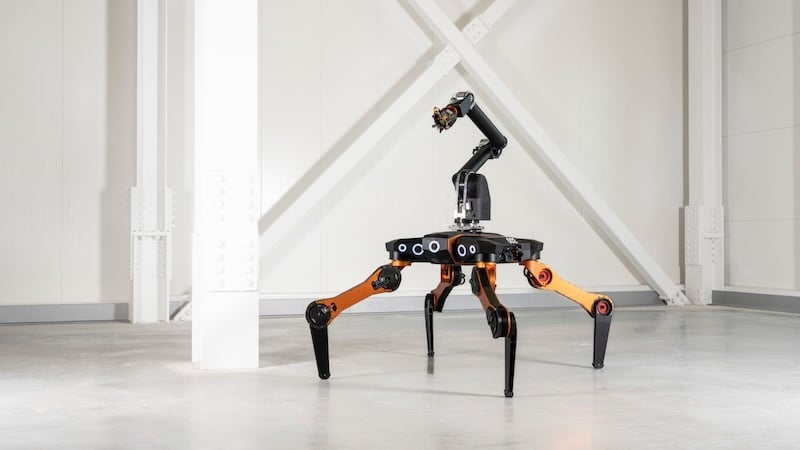
Liam goes behind the spider robot, chatting with a few key members of the All3 team. Hot on the heels of a $25 million seed round, the U.K. startup is taking an innovative approach to automating the massive construction industry, beginning with some German work sites. As for the system’s form factor, robotics head Napo Montano says, “For the Mantis, it’s when you see it moving, and she learns new behaviors. When we saw the Mantis going upstairs for the first time, she was moving in a certain way within the environment, and you really see a creature that is different because she’s learning in different ways compared to humanoid robots. You’d think she’d go around an object or up the stairs in a certain way, and instead, you see a very different and unexpected behavior that is faster and more efficient."
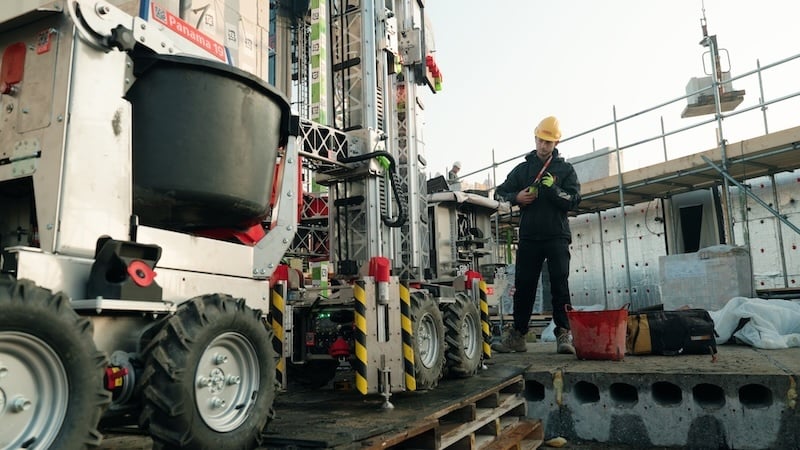
A few things about the construction industry. 1. It’s huge. 2. People need homes. 3. There’s a lot of money to be made. 4. It seems somewhat set in its ways — though the same can be said about virtually any industry until a sufficiently disruptive technology tips the scales. It’s important to remember, too, that there are a lot of elements seemingly overdue for an update. With that in mind, I appreciate this quote from Becca’s interview with Monumental founder, Salir al Khafaji: “I realized that no one was thinking about the shell, which is actually a really important part of the house. If you look at construction robotics, even today, there's a lot of startups founded in the last two years that were basically like making the big machines autonomous, right? I realized that no one was trying to do the actual building part, like literally building up the house.”
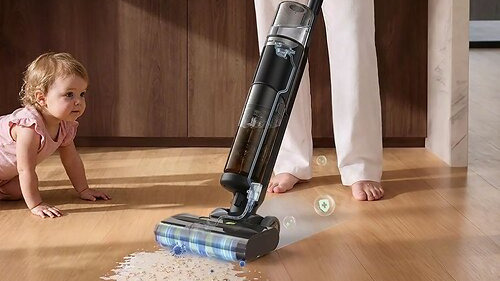
Here’s a sentence from iRobot’s latest press material to wrap your brain around: “Unlike traditional Roomba robots, Roomba Electro Plus is a first-of-its-kind, cordless, user-operated cleaning system that brings commercial-grade sanitization into a simple, everyday cleaning experience.” More than two decades after ushering in the era of the automated vacuum, someone at the company was finally brave enough to ask the question: what if someone made a robot vacuum that wasn’t a robot? Okay, I admit I missed this bit of news during my travel, as pre-sale opened in July. Now that the system is available, perhaps it’s worth reexamining in the wake of a recent FCC ban that could impact a significant swath of the robot vacuum industry.
That could well include iRobot, as the firm was hoovered up by Shenzhen-based Picea at the end of last year. After all, this $400 hardware floor cleaning system is a rare release from the company that doesn’t fit the robot bill. A spokesperson for the company previously noted, "We are aware of the FCC’s recent action and are working with them to better understand its implementation and potential impact. We remain committed to serving our customers and will share updates as more information becomes available.” Or maybe I just wanted an excuse to shoehorn it into the newsletter. We’ll never know for certain.
The Association for Advancing Automation (A3) is North America’s largest automation trade association representing more than 1,400 organizations involved in robotics, artificial intelligence, machine vision & imaging, motion control & motors, and related automation technologies.